The Lost Art of Campfire Conversation: When No One Can Google It
Somewhere around day three, the phones go quiet and the questions get better. What happens to a group of strangers when nobody can look anything up.
· 5 min read
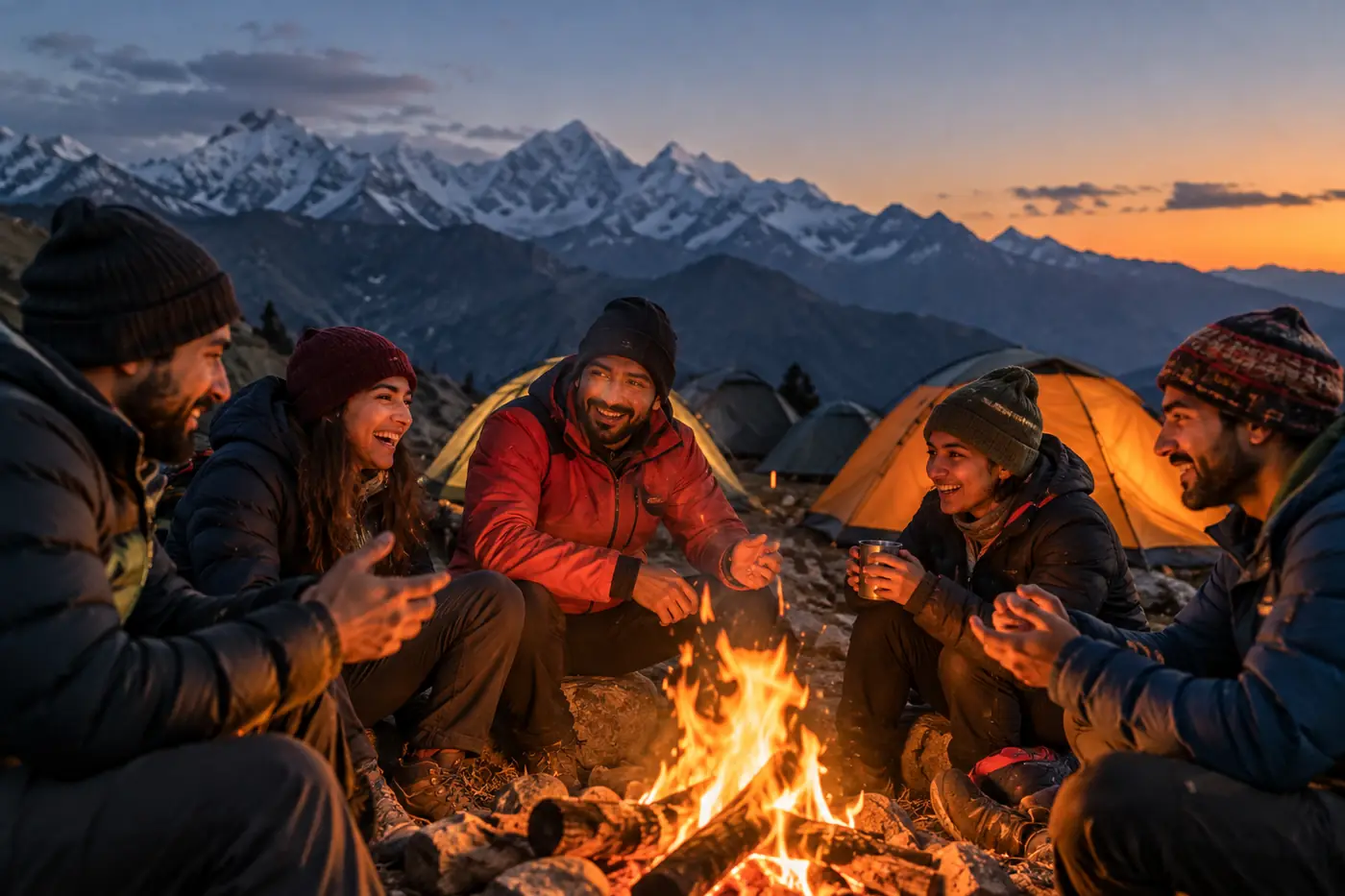
Picture the scene. Seven people sit on folding stools in a high meadow as the light goes orange. Someone asks a harmless question: how tall is the mountain we climbed today? Everyone reaches for a pocket out of habit. Then they laugh, because the signal went away two days ago.
So they guess. One person says 6,000 m. Another says 4,000. A third is certain it is on the map. The argument goes on for twenty minutes and nobody wins. It is one of the best conversations of the trip, and it started with not knowing the answer.
The first night is awkward, and that is fine
Strangers on day one tend to talk about the same things: where they are from, what they do, which trek they have done before. It is polite and a little stiff. People sit near their own phones, still scrolling while the soup arrives.
Nobody is doing anything wrong. It is just how we are wired now. When a quiet moment comes, we fill it with a screen.
By day three, something shifts
When there is no signal, the quiet moments stay quiet until somebody speaks. At first that feels uncomfortable. Then it starts to feel like room. After a long day of walking, your head is clear and your body is pleasantly tired. Stories come out on their own.
- The software engineer admits she has not had a free weekend in a year.
- The retired teacher tells the story of the first mountain he ever climbed, in sandals.
- The college friends start remembering things they had forgotten about each other.
- The youngest in the group asks the question nobody else dared: what do you actually want to do with your life?
These are illustrative moments, not real quotes, but anyone who has spent a few nights in the hills will recognise them. The mountains seem to give people permission to be honest.
Why it works
There are a few simple reasons. First, nobody is performing. There is no photo to post, no reply to write, no one waiting for an answer. Second, shared effort bonds people quickly. You have all climbed the same hill, shared the same snacks and survived the same cold morning. Third, the day ends early. When it is dark by six, evenings have no choice but to be long.
And then there is the fire, or the stove light, or the circle of headlamps pointed at the floor. Humans have been gathering like this for a very long time. It is not nostalgia. It is just how we are built.
The stove-side rules
A quick note on the fire itself. In many Himalayan forests, open fires are not allowed, and cutting wood up high harms the mountain and the villages below. On most treks the real centre of the evening is a stove, a pot of soup and a circle of warm hands. The magic comes from the people, not the flames.
How to start a good conversation
Some groups need no help. Others need a small nudge. If you want to be the person who gets the circle talking, try these:
- Ask a question that has no wrong answer. What was the best meal you ever had? Which place felt like home?
- Play a low-pressure game. Two truths and a lie, 20 questions, or name that peak all work well, and none need a phone.
- Tell a small story first. If you go first and keep it light, others follow.
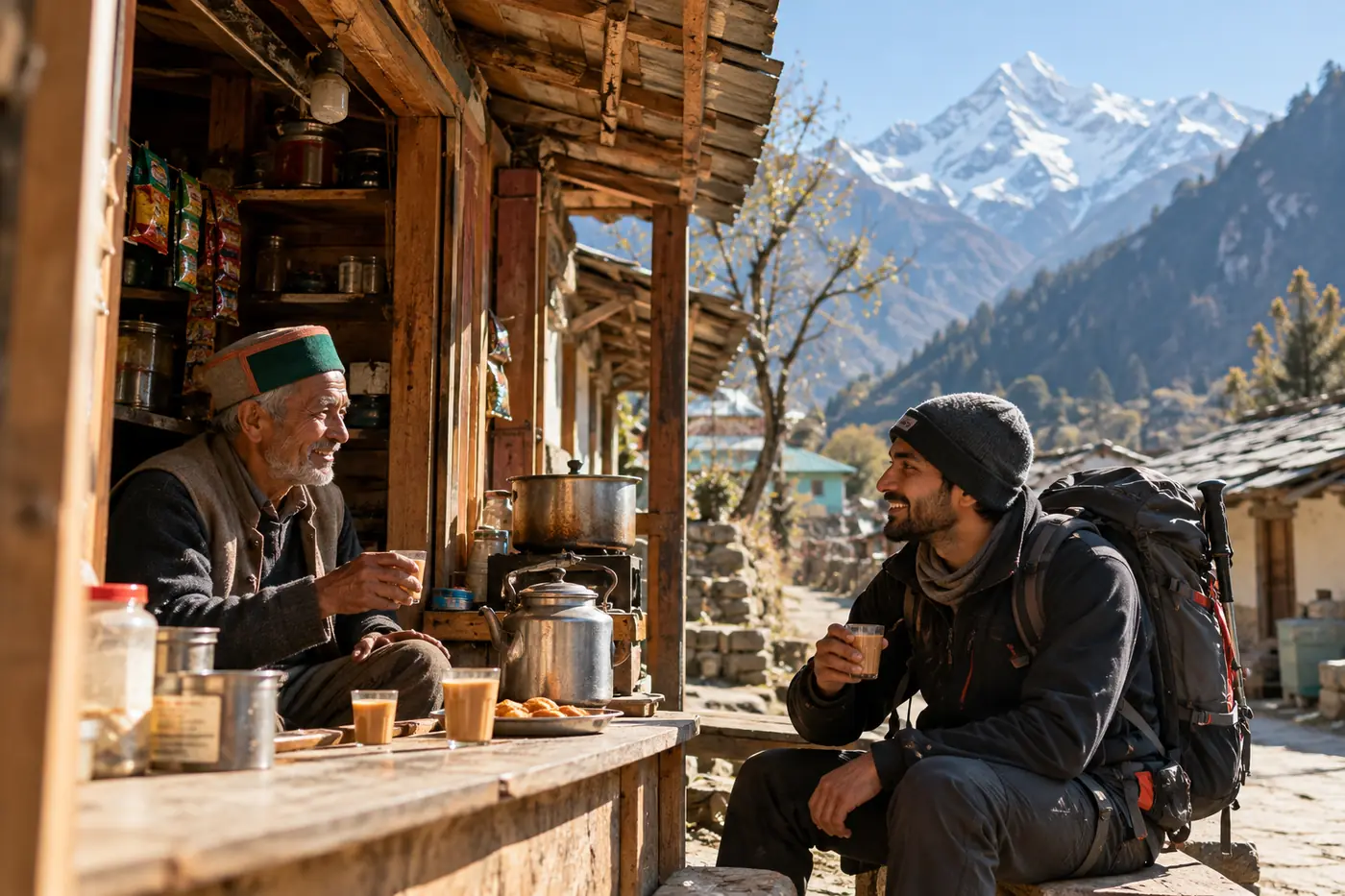
- Ask your trek leader and the local crew about their lives. Where they grew up, what the valley looks like in winter, the strangest trekker they ever met. These are often the best stories of the trip.
- Pass around a thermos. Something warm in your hands makes talking easier.
And what about all the unanswered questions?
Here is the lovely part. You will leave the trek with a long list of things you wondered about and could not check. What was that bird? How old is that deodar tree? What is the name of the peak behind the ridge? Your trek leader may know some of these. Many you will have to look up when you get home.
Strangely, you will remember them far longer than anything you could have looked up in two seconds. A question you carried for days becomes a small treasure. You also learn that not knowing something for a while is perfectly fine.
A word for the worried
If a week without signal sounds scary, you are not alone. Plenty of people feel the same before they come. Give your family the route plan and ask us how the team stays in touch with base on your trek. Then, if you can, put the phone at the bottom of your bag and keep it for photos only.
If you are an introvert, relax. Nobody is forcing you to talk. Listening counts, and sitting quietly beside a warm stove counts as well. The conversation will happen around you, and you can join whenever you are ready.
Bring a story, take one home
The trek will give you views. The evenings will give you something you did not plan. On routes like Har Ki Dun and Phulara Ridge, where villages and long walking days set a slower pace, the nights are made for sitting together and talking.
Come with an open mind, a warm jacket and one good story. Have questions about the group experience, or what a usual evening looks like in camp? Ask a trek leader on WhatsApp. We will tell you what to expect.
Questions before you book?
A trek leader will answer on WhatsApp, usually the same day.
WhatsApp +91 98412 74429Treks in this story
Villages & Valleys
Har Ki Dun
Uttarakhand
A cradle-shaped valley of ancient villages, wooden temples and Himalayan giants.
- 7 days
- 3,566 m
- Apr – Jun, Sep – Nov
₹11,999 per person
Next departure 18 Apr
Alpine Meadows
Phulara Ridge
Uttarakhand
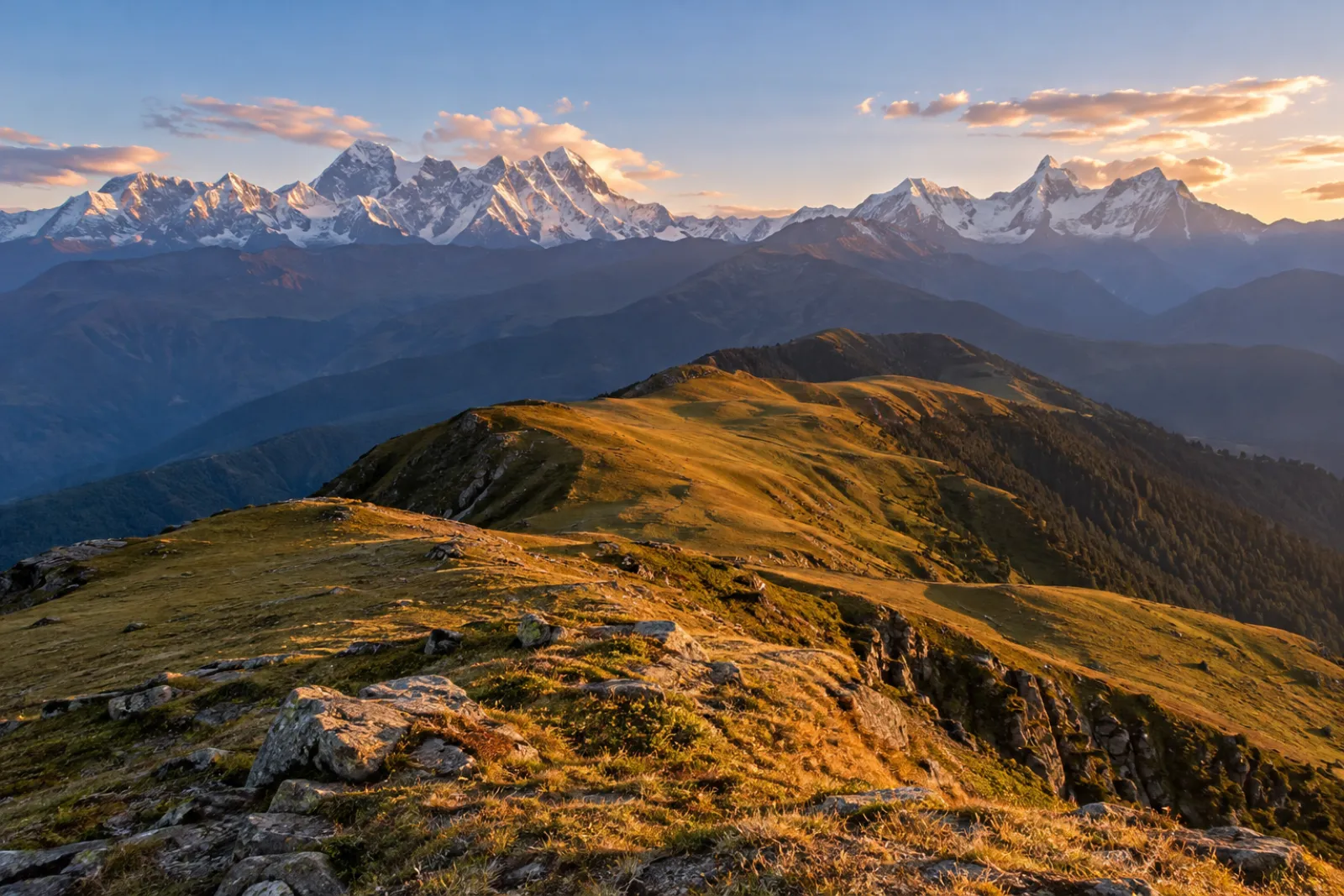
A ridge walk above the forest, with the Har Ki Dun peaks for company.
- 6 days
- 3,600 m
- Apr – Jun, Sep – Dec
₹10,499 per person
Dates on request