What to pack for a winter trek in the Himalaya
Layers, not bulk. A simple packing list for a six-day snow trek, and what you can leave at home.
· 5 min read
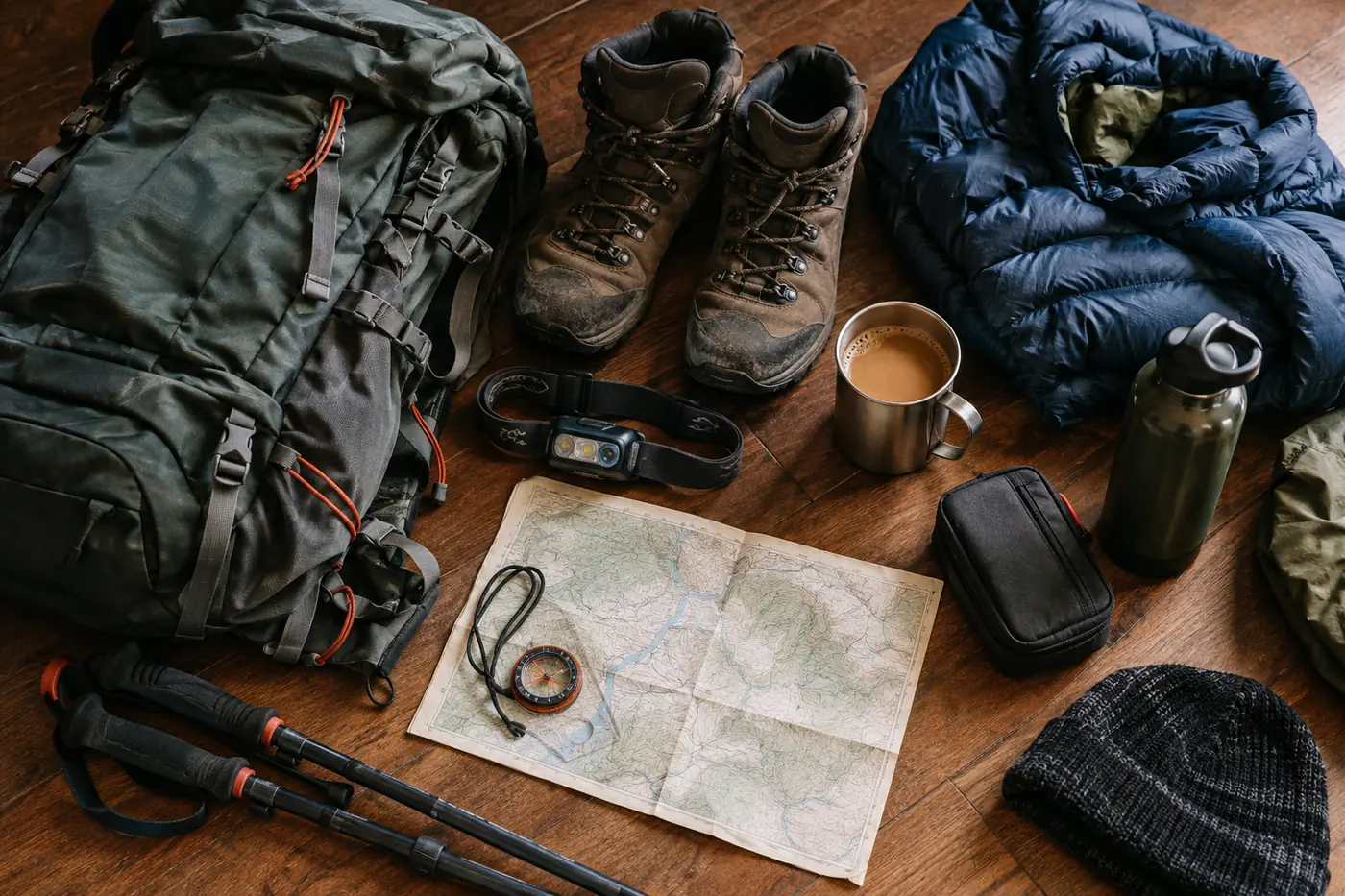
Most first-time trekkers pack too much and still feel cold. The trick is layers: thin clothes you can add or remove as the day changes. Here is what we ask our groups to bring for a winter trek.
Wear in layers
- Base layer: two quick-dry T-shirts and one set of thermal innerwear for nights.
- Middle layer: one fleece jacket and one light sweater.
- Outer layer: a down or synthetic padded jacket, and a waterproof shell.
- Legs: two trek pants (no jeans) and thermal leggings.
Feet and hands
- Trekking shoes with ankle support and a good grip. Wear them in for two weeks before you go.
- Three pairs of woollen socks and two pairs of thin socks.
- Waterproof gloves, plus a thin inner pair.
- Gaiters if you have them. We provide microspikes for the snow.
Head and sun
- A woollen cap and a neck warmer or buff.
- Sunglasses with UV protection. Snow glare is strong above 3,000 m.
- Sunscreen and lip balm with SPF.
In your daypack
- Two one-litre water bottles. Mountain streams are cold; drink often anyway.
- A headlamp with spare batteries for summit morning.
- A small pack of dry fruit and chocolate.
- Personal medicines, and a power bank. Your phone will mostly be a camera.
Leave at home
Cotton clothes, jeans, a laptop, and anything you would be sad to get wet. Tents, sleeping bags, meals and microspikes are part of every Wifi to Wild trek, so you don't need to carry them up.
Questions before you book?
A trek leader will answer on WhatsApp, usually the same day.
WhatsApp +91 98412 74429Treks in this story
Winter snow
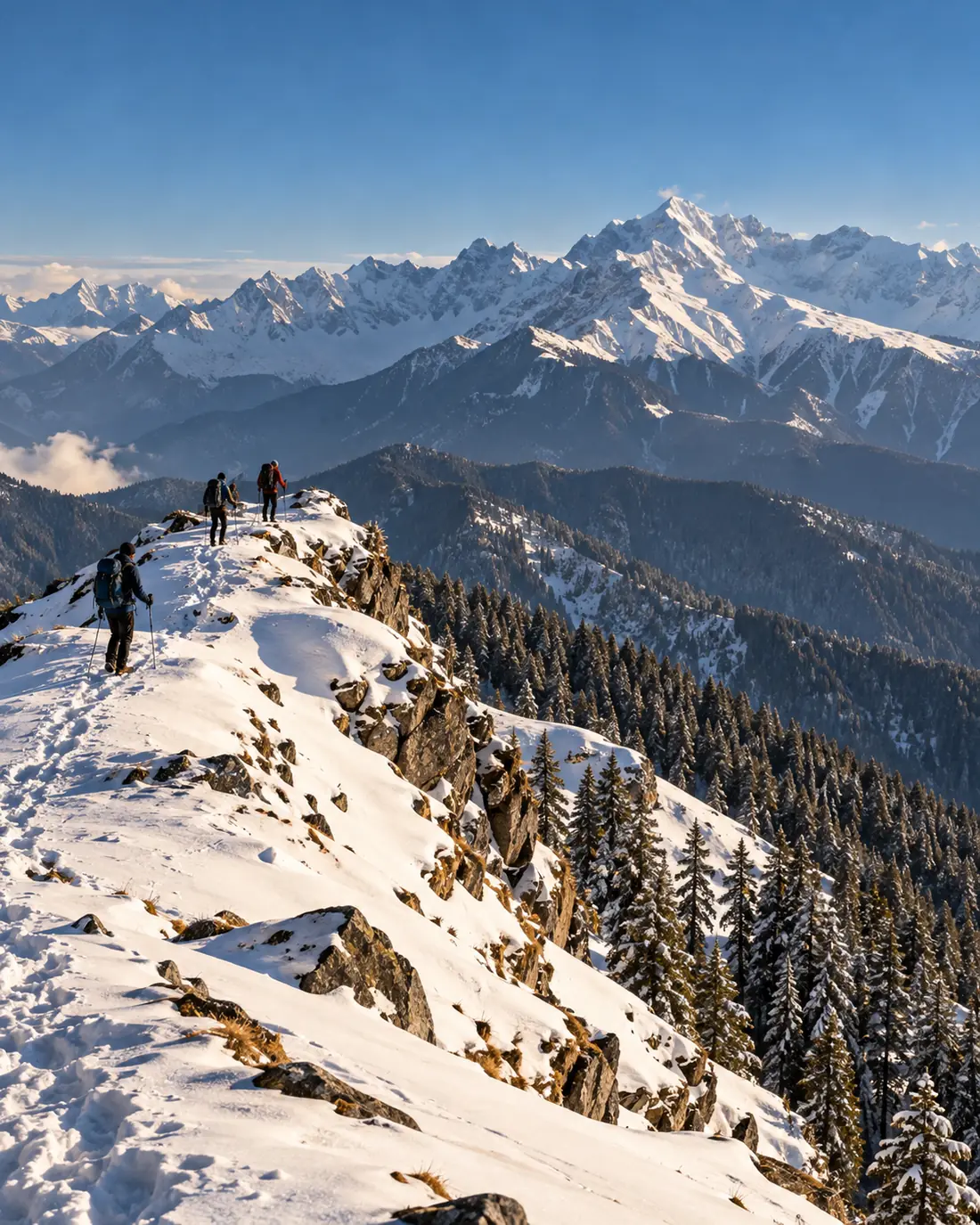
Kedarkantha
Uttarakhand
The classic first snow summit, through silent pine forest.
- 6 days
- 3,810 m
- Dec – Apr
From ₹9,999
Next departure 14 Dec
Winter snow
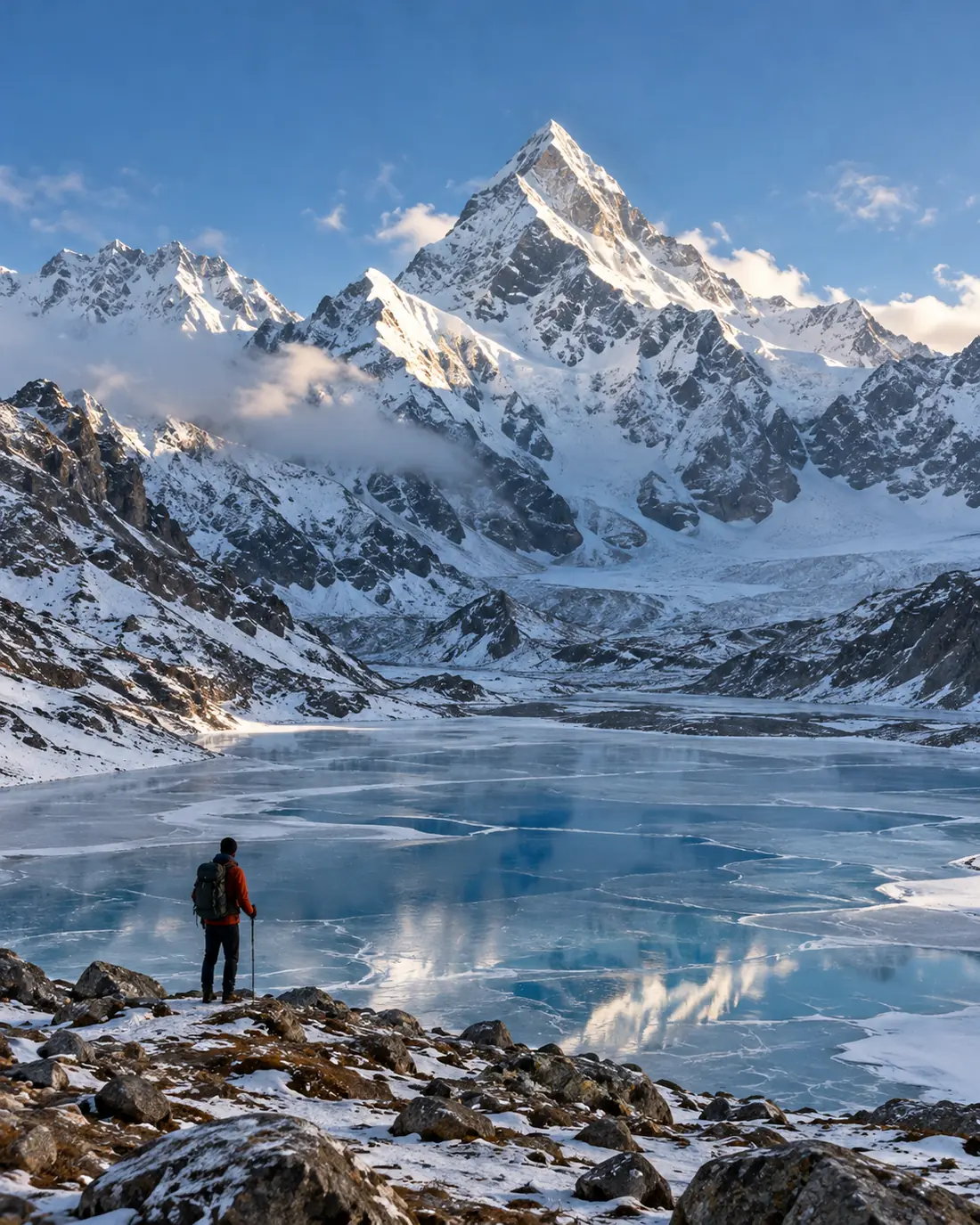
Brahmatal
Uttarakhand
A frozen lake with Trishul and Nanda Ghunti for company.
- 6 days
- 3,734 m
- Dec – Mar
From ₹10,499
Next departure 21 Dec